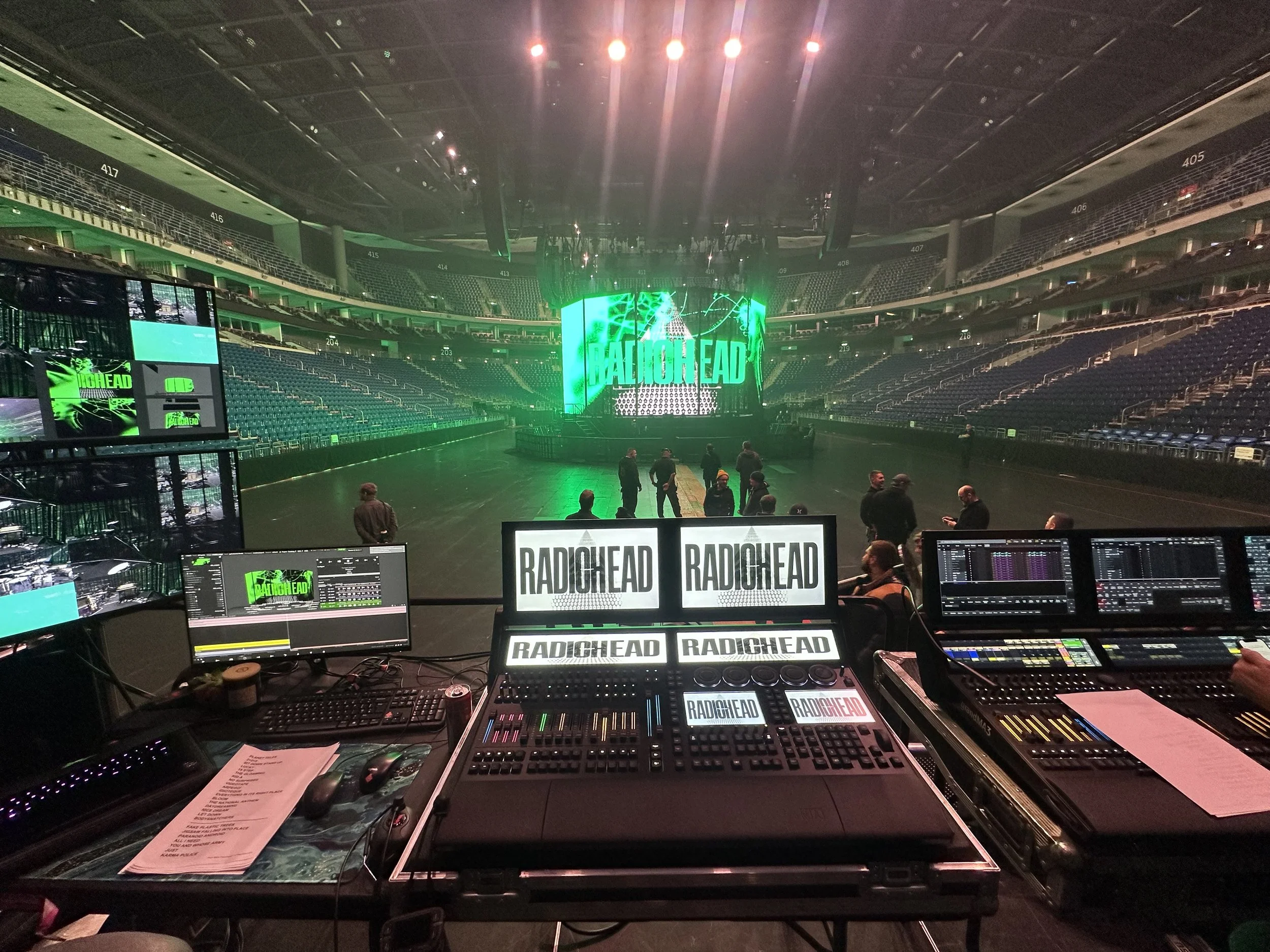
Radiohead European Tour 2025
Delivering a Fully Live, In-the-Round Video System
The Brief
Radiohead’s return to touring demanded a live production that reflected the band’s instinct for reinvention. The creative vision rejected fixed structures in favour of real-time responsiveness: no pre-rendered content, no timecode, no fixed cue stack and no set show structure. Each performance drew from a pool of more than 70 songs, with setlists often finalised shortly before showtime. Video would be fundamental to the show and needed to remain flexible, expressive and stable under constantly changing conditions. Universal Pixels was chosen as video partner, building on an eight-year collaboration with the band.
The Creative Vision
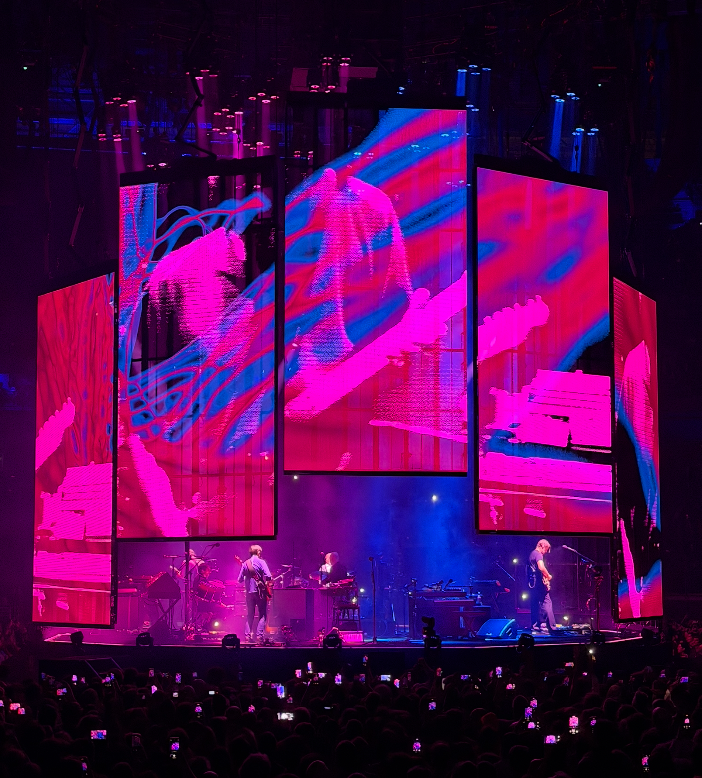
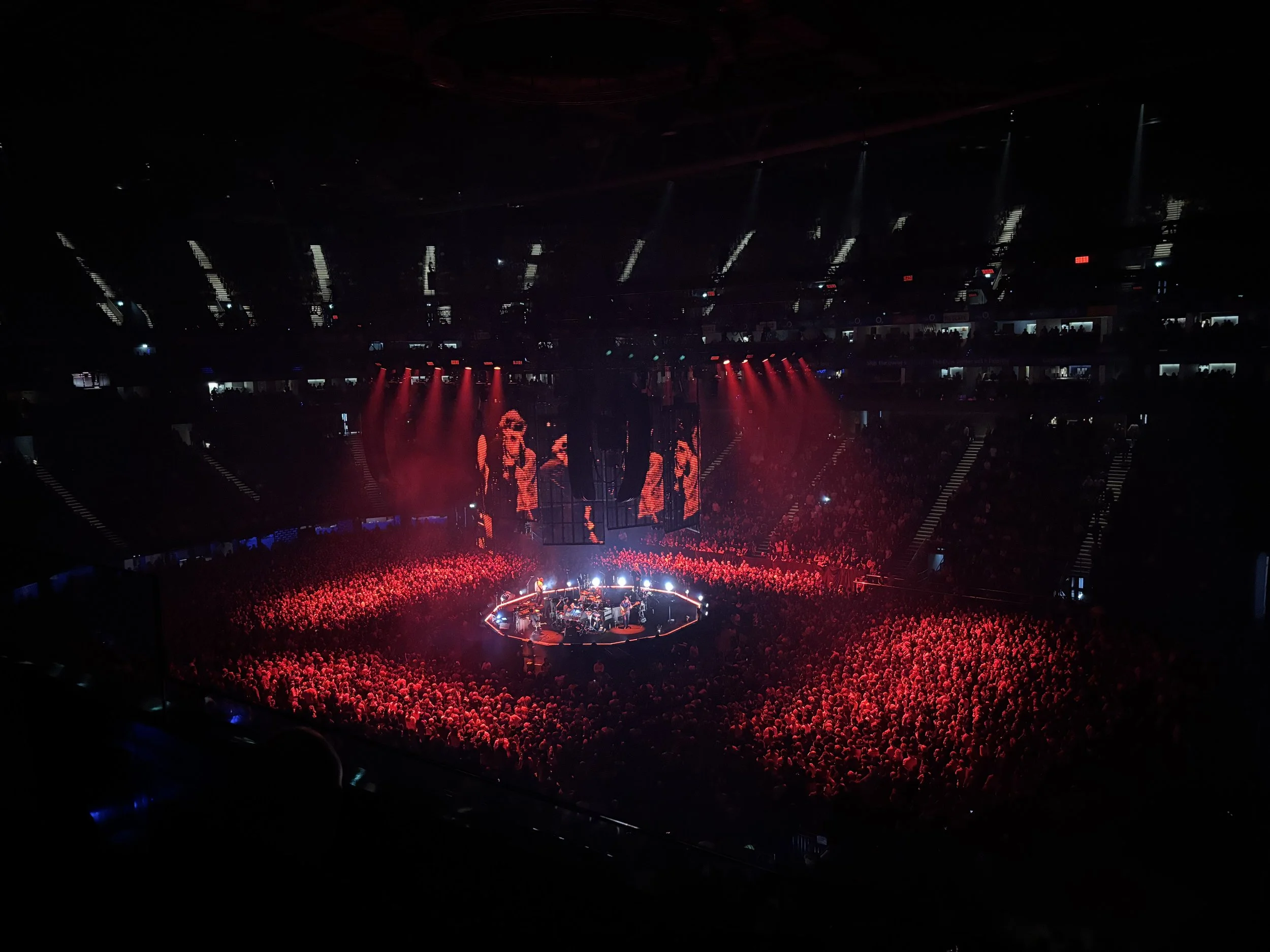
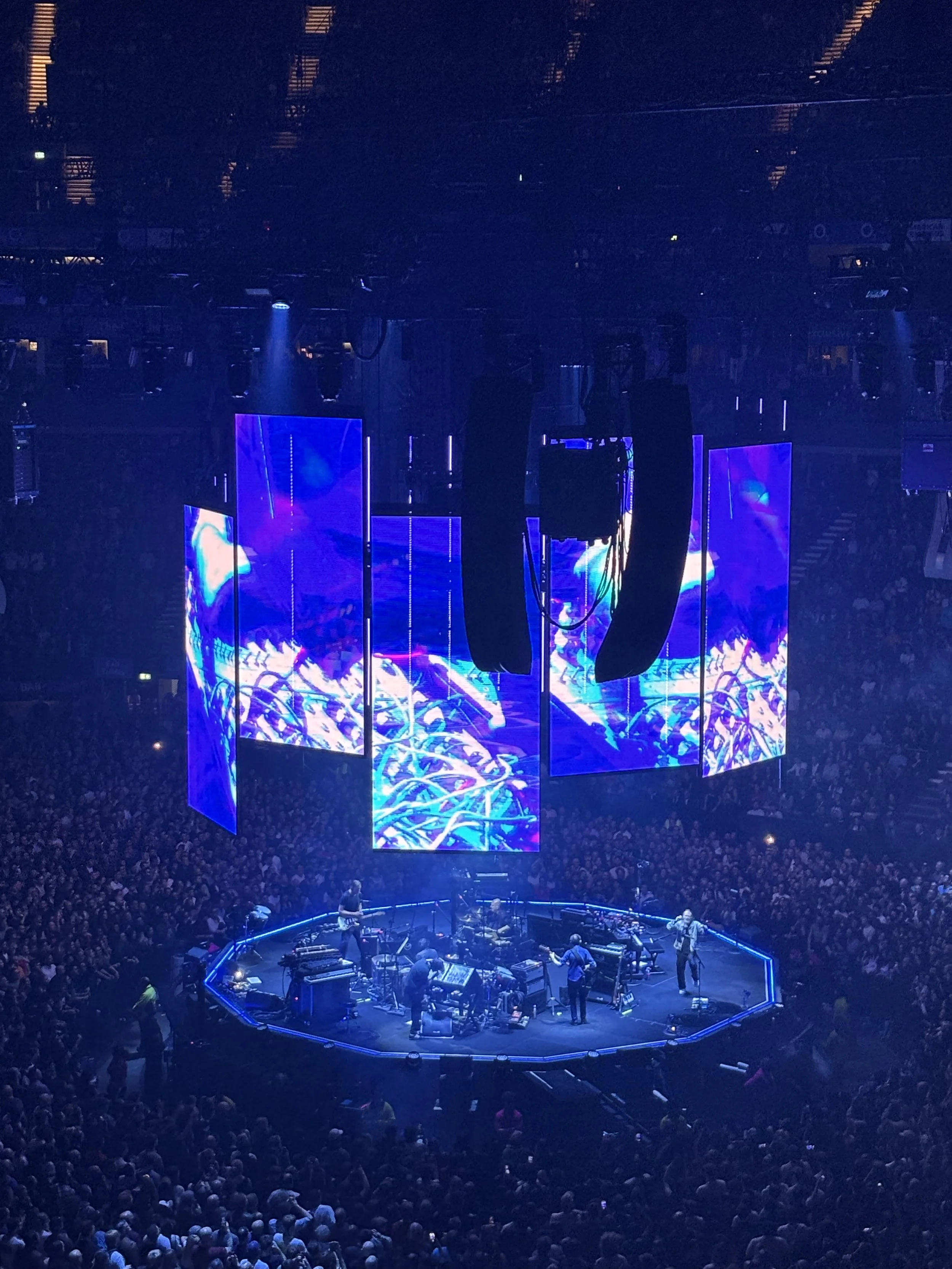
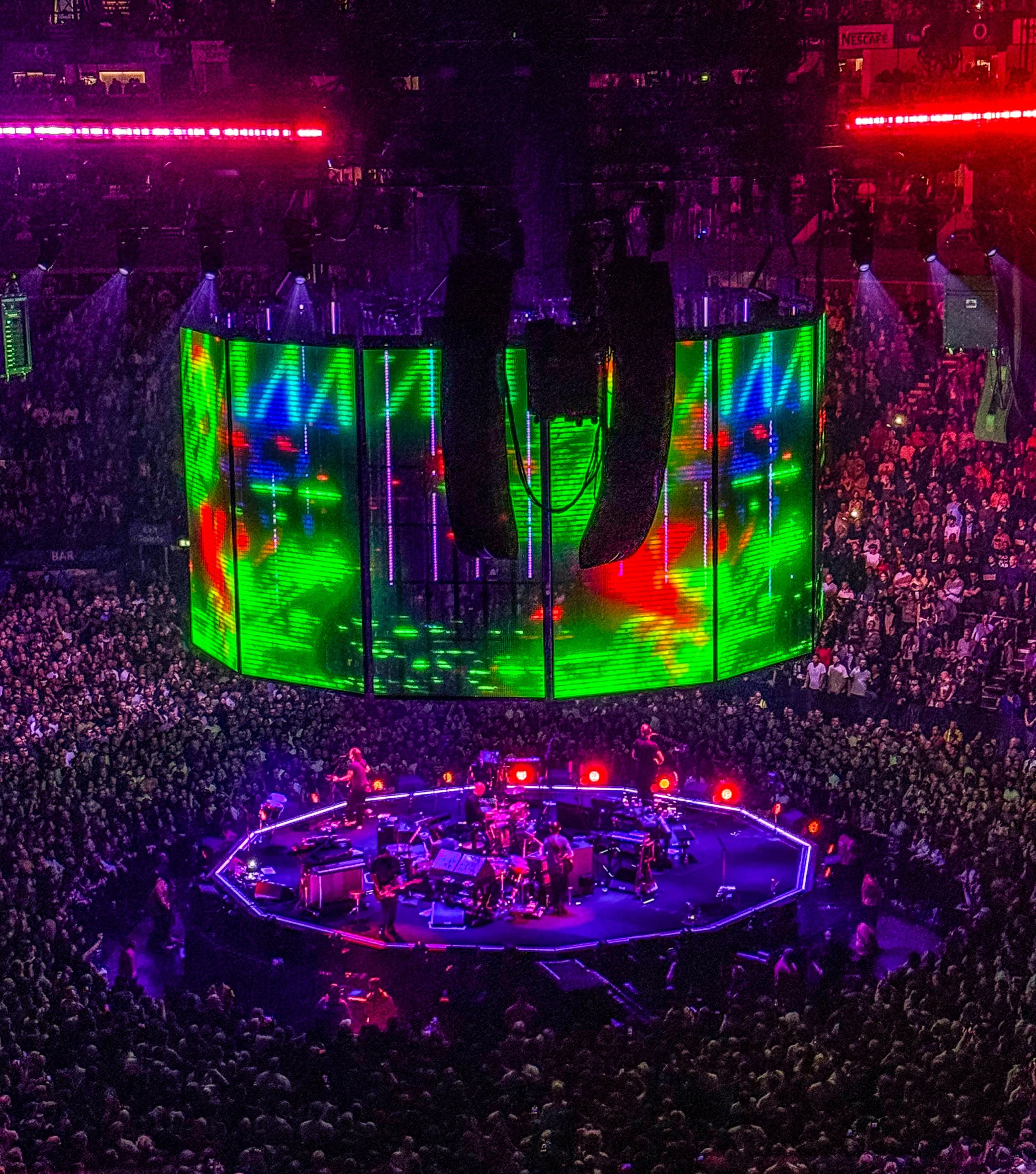
Under new creative lead Sean Evans, the show was conceived as a true in-the-round experience. Video Director Ellie Clement, Lighting Designer Pryderi Baskerville and technical systems specialist Jeremy Lloyd of Wonderworks worked closely to remove any visual obstructions. Traditional camera platforms were eliminated entirely. The result was a clean, 360-degree environment where the band remained visible and connected with the audience at all times.
The Challenge
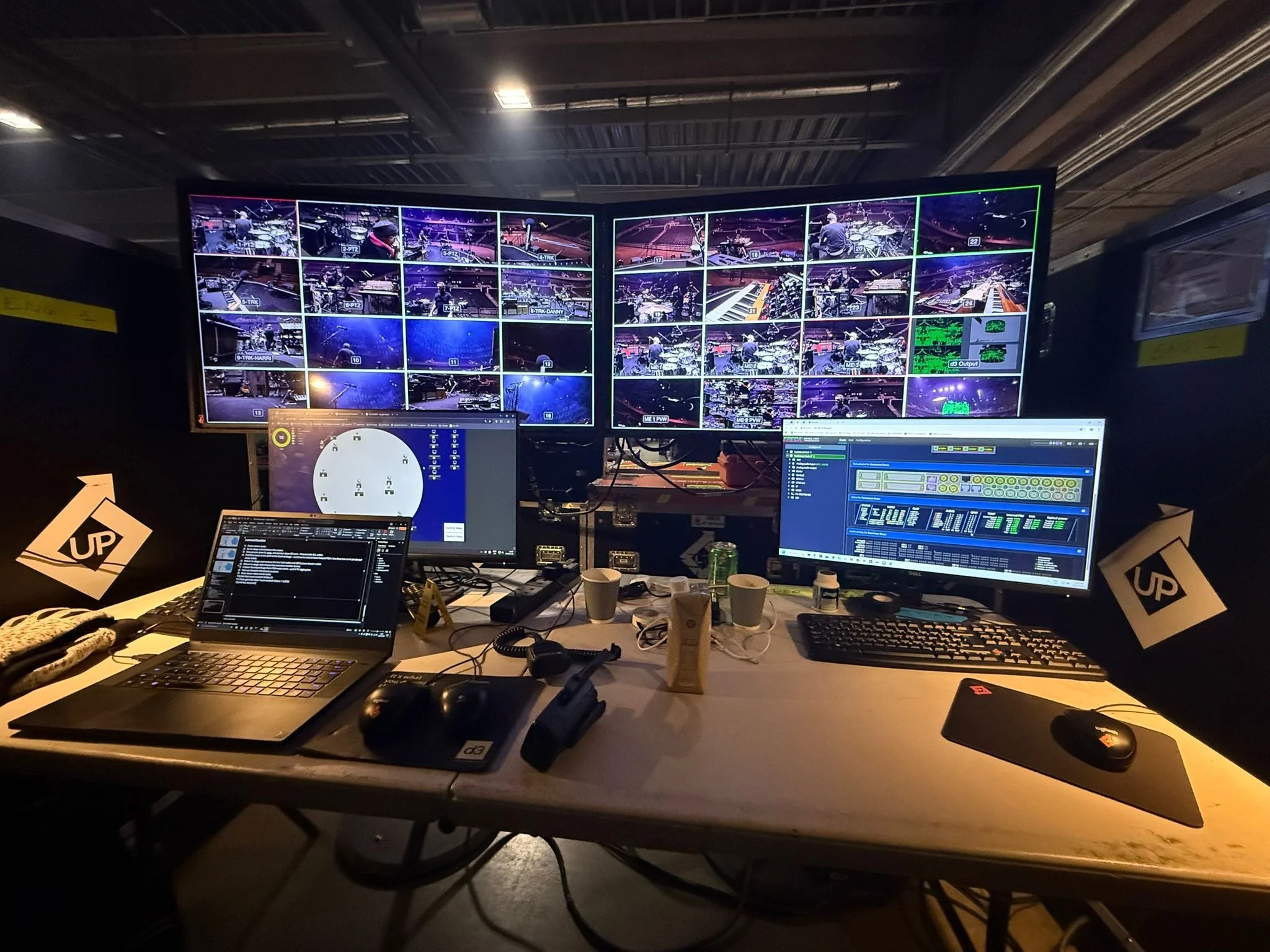
Removing camera platforms meant all cameras had to be operated remotely and positioned within the stage footprint. At the same time, the design called for more than 20 camera inputs to appear on screen across a set of independently moving LED surfaces.
The system needed to support:
Fully live content generation
Rapid transitions between visual looks
Multiple screen mappings
Complete redundancy
Manual cueing with no reliance on timecode
The Technical Solution
LED System
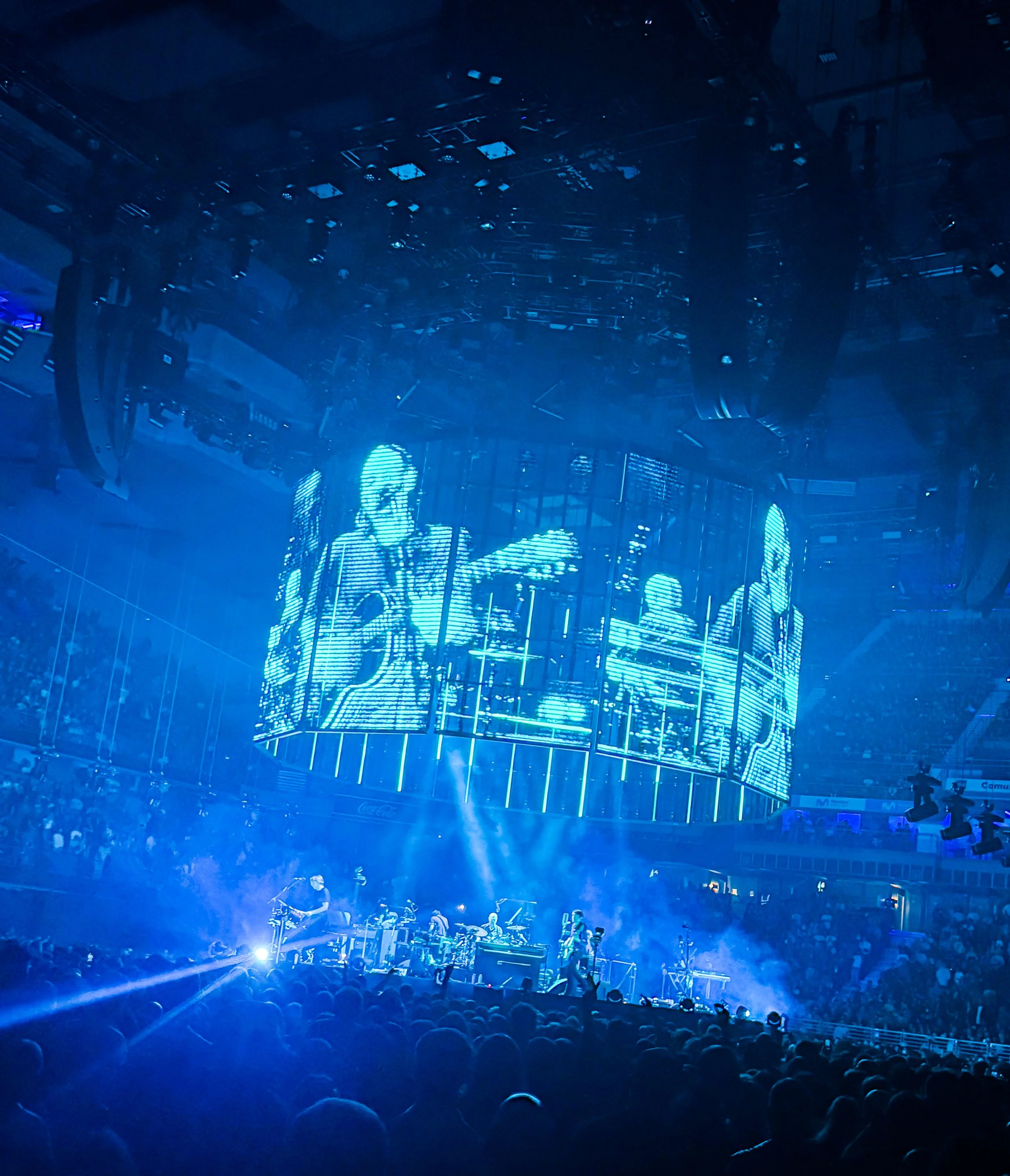
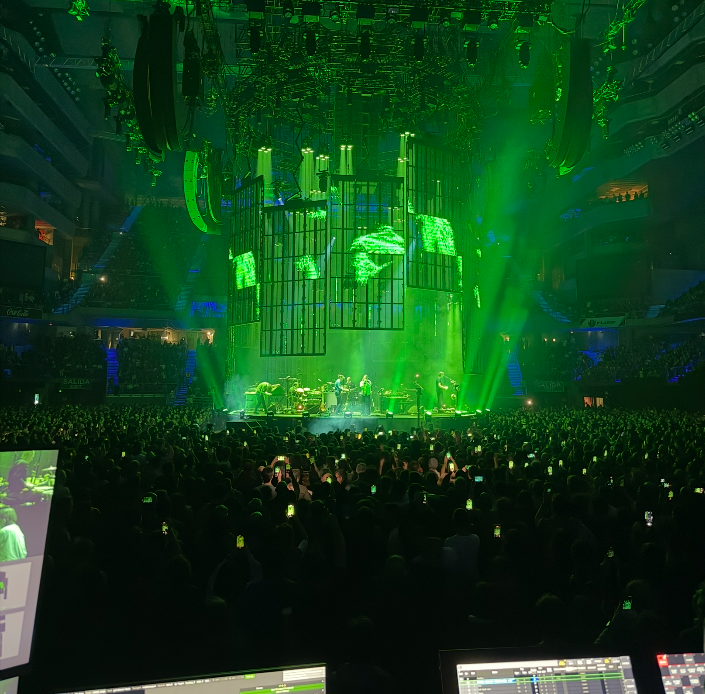
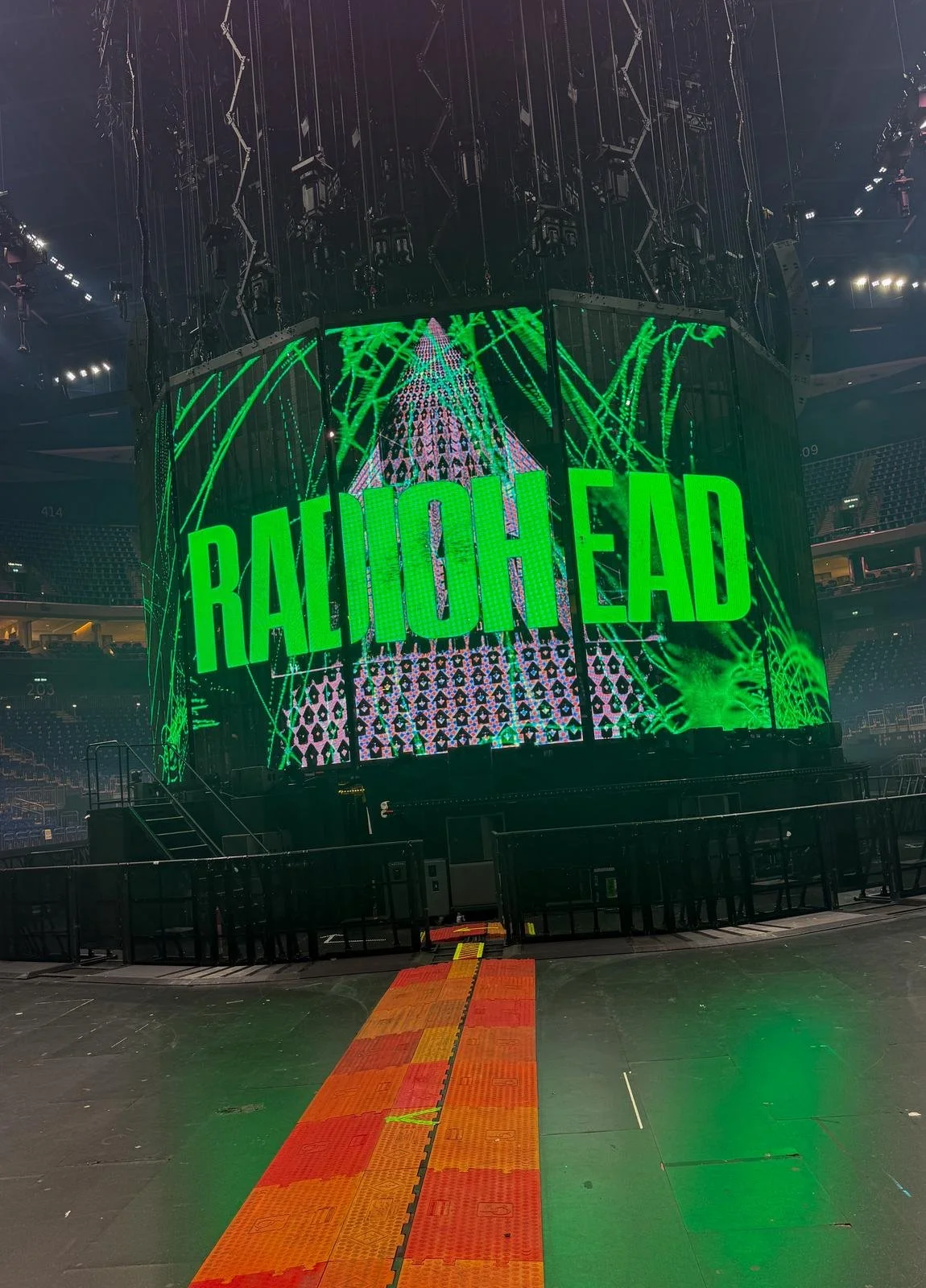
The video design centred on a 12-sided cylindrical LED structure built using ROE Visual Vanish V8T and ROE Strip products. Selected for transparency, weight, rigging speed and touring reliability, the screens moved independently throughout the show, rising from stage level and reconfiguring for each song. Brompton Tessera SX40 processing with fibre-based Tessera XD distribution provided the responsiveness and colour accuracy required for fully live visuals.
Camera Infrastructure
All cameras were operated remotely to maintain a clean 360-degree environment:
2 × Panasonic AW-UE150 cameras on 16-metre curved tracks
6 × additional PTZ cameras positioned around the stage
20 × Blackmagic G2 cameras across static, gimbal and pedestal systems
Camera feeds served multiple roles, including live Notch content generation, technical monitoring and creative reference.
Control and Processing
Disguise GX 3 servers powered the heavy real-time Notch workload and complex dynamic mappings. Previsualisation in Disguise Designer allowed video and lighting interactions to be resolved before arriving on site. The entire show ran without timecode. Visual cues were triggered manually using Sockpuppet, enabling the system to respond instinctively to the band’s performance.
Network Architecture
Universal Pixels designed a fully redundant network built around 12 Netgear AV Line M4250 switches. Multiple VLANs separated camera control, Notch processing, tracking data and LED distribution, ensuring system stability and fault isolation.
Crew and Delivery
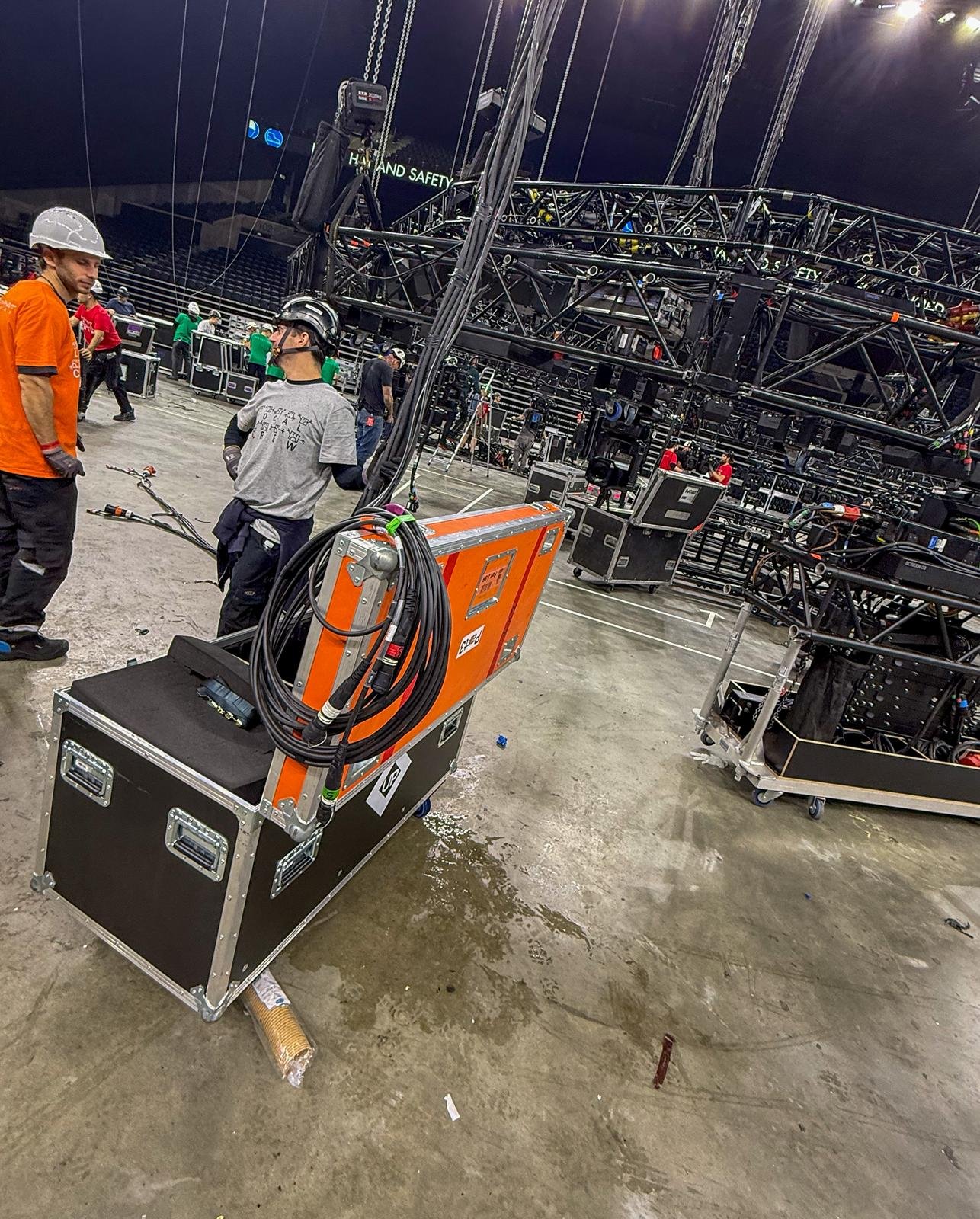
Universal Pixels supplied a touring crew of 10 specialists across LED, cameras, systems engineering and control. Departments were connected through a central communications system, enabling rapid coordination between video, lighting, rigging and stage management.
Custom solutions included bespoke camera connection units, power distribution to reduce cabling complexity, custom camera control software for miniature cameras and a dedicated PPU.
The Result
The tour delivered a fully live, in-the-round video experience that evolved uniquely each night. Video became an expressive, responsive element of the performance rather than a pre-programmed backdrop. For Universal Pixels, the project represents one of the most complex system builds undertaken to date. More importantly, it demonstrated how carefully designed technical infrastructure can remove constraints and allow creative ambition to thrive.