How To Train Your Dragon 2025
The Brief
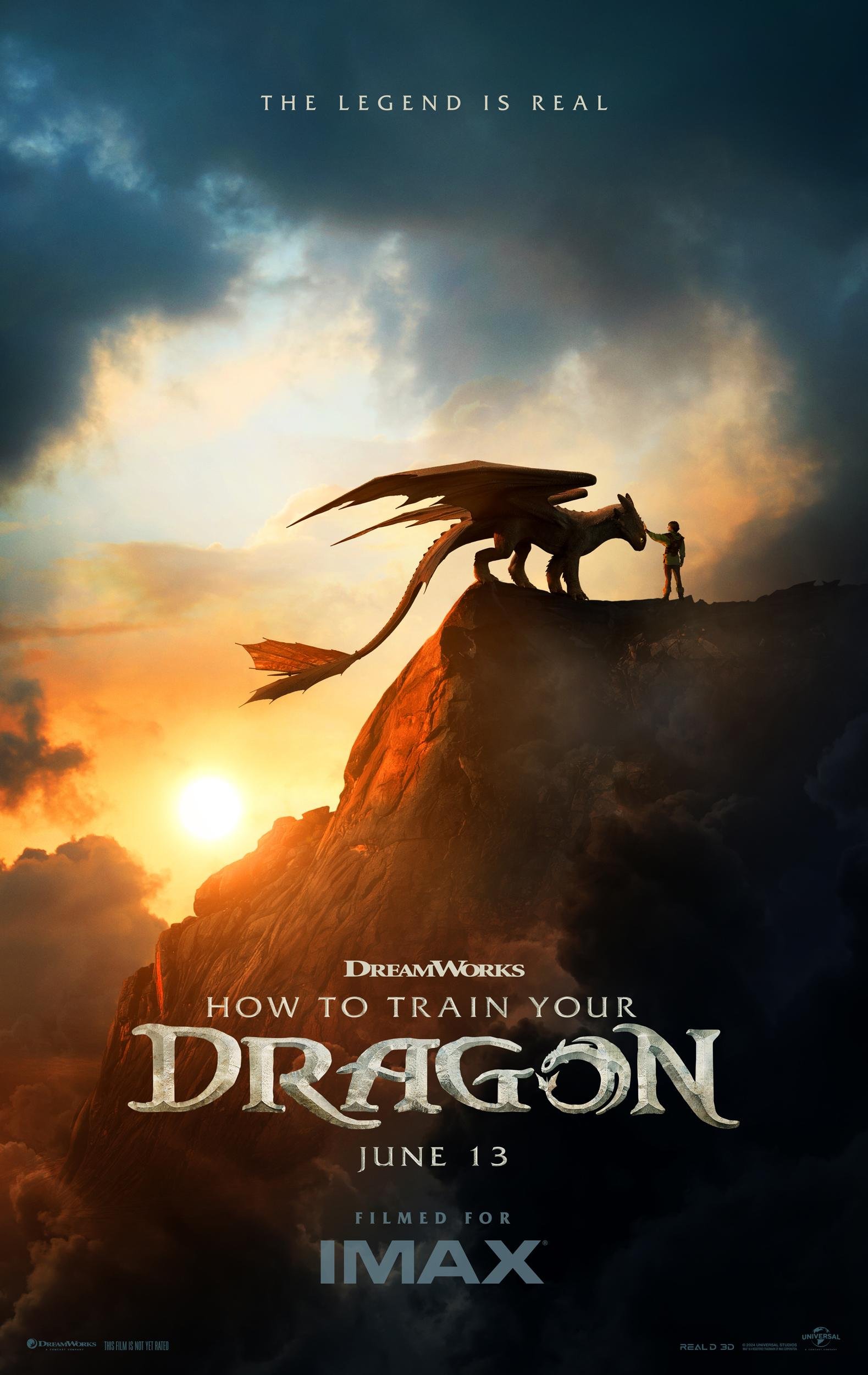
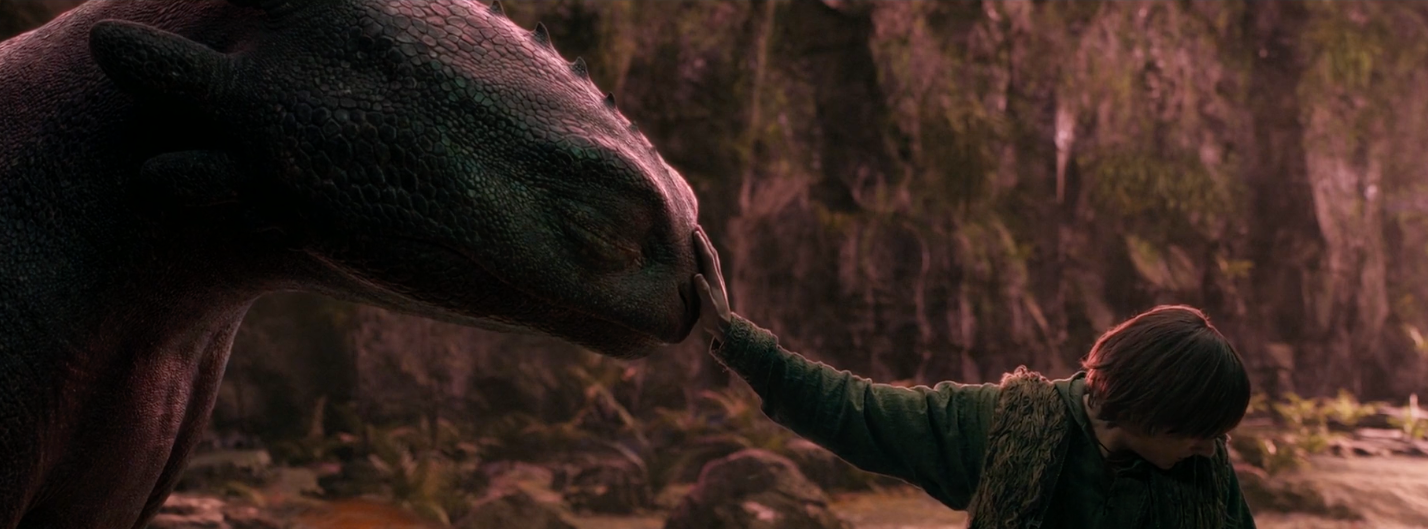
Universal Pictures’ live action adaptation of How To Train Your Dragon set out to recreate the cinematic scale of the animated original, including its defining aerial sequences of dragons racing through skies and cliffs, moving between sunlight, shadow and different times of day. Director Dean DeBlois joined forces with cinematographer Bill Pope ASC and gaffer Jonathan Spencer to shoot the flying scenes using IMAX-approved ARRI LF cameras and an image-based lighting system powered by SUMOLIGHT SUMOSKY. Universal Pixels, through its strategic rental partnership with SUMOLIGHT, supplied and integrated the on-stage equipment at Titanic Studios in Belfast.
The Creative Vision
The flying scenes were designed to mirror the fluid camera work and cinematic lighting of the animated films, whose visual language was shaped with the influence of Roger Deakins ASC BSC. Rather than relying on LED video walls, Pope opted for an image-based lighting approach. The priority was the quality and control of light, ensuring that performers, costumes and environments were lit naturally while still allowing the atmosphere to shift dynamically around them. “We needed dynamic animated lighting for the many different flying scenes going in and out of rocks, shadow, sun, daytime and night and different moods,” explained Spencer. “Bill didn't want to use video walls and preferred to use IBL on stages. It's all about the quality and control of light which is hard to get with a video wall.”
The Challenge
The production needed to deliver large-scale flying sequences while maintaining the lighting control required for feature film cinematography. At the same time, the lighting needed to behave like true cinematographic illumination rather than a display surface.
Key requirements included:
• Dynamic environmental lighting for multiple flight scenes
• Smooth transitions between shadow, sunlight and changing times of day
• Realistic lighting interaction on actors experiencing physical movement
• A two-stage setup capable of keeping pace with the shooting schedule
• Integration with VFX look development
The Technical Solution
Flight Rigs and Stage Layout
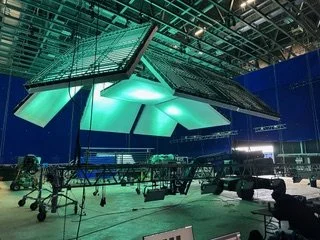
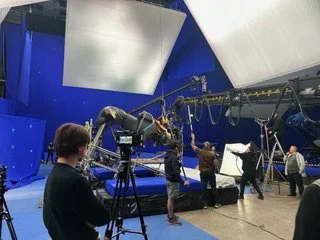
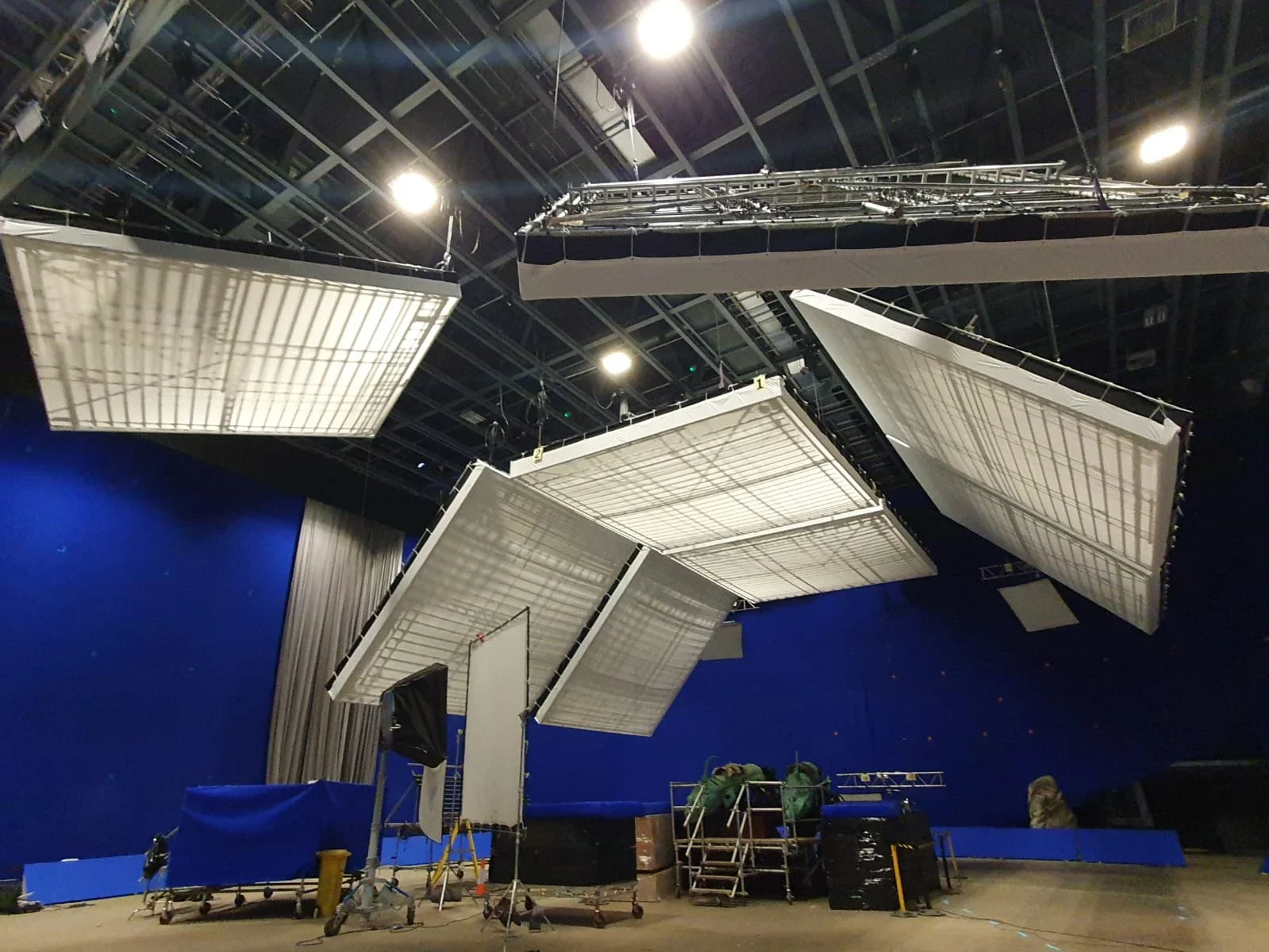
Inspired by technology used on the Fast & Furious films, the SFX team created hydraulic rigs capable of simulating dragon flight and giving actors realistic motion. To manage the scale of the flying work, Spencer and Pope divided the scenes across two identical adjacent sets, each with a gimbal and lit by eight 20 x 20 softbox frames comprised of 1200 SUMOSKY bars. “Bill and I designed the system so we could run both gimbals at once,” explained Spencer. “They're quick to rig, easy to use and they worked really well for us.”
Image-Based Lighting
SUMOSKY bridges the gap between lighting and VFX. Unlike traditional LED video panels, SUMOSKY is a true RGBWW, modular, multi-pixel LED array made of linear bars, each offering 40 pixels of resolution. The illumination can be used to create custom soft boxes and also light cycloramas, backlight translights, softdrops and large diffusion cloths, making giant panel lights of any shape and size.
Superior to LED walls in this application, the SKY produces high-quality white light alongside deep saturated colours, enabling environmental lighting to shift smoothly while maintaining natural-looking illumination. “I’ve had previous experience working with the SUMOSKY so I knew it would also deliver the scale we needed for this show and keep within our budget,” he said. “I had to get it right and knew that if I used that system it would work.”
Look Development
During six weeks of prep, the camera department worked closely with the VFX team at Framestore to develop lighting looks for each sequence. These states were driven on set by media servers with control via the lighting console, allowing the animated lighting environments to be played back and adjusted during filming.
The Result
By combining hydraulic flight rigs with large-scale animated lighting, the production was able to capture convincing flight scenes while maintaining the lighting quality required for feature film cinematography. Traditional dolly shots were blended with the gimbal work, allowing Pope, Spencer and DeBlois to move seamlessly between intimate character moments and expansive aerial action.