DAVE - The Boy Who Played The Harp Tour 2026
The Brief
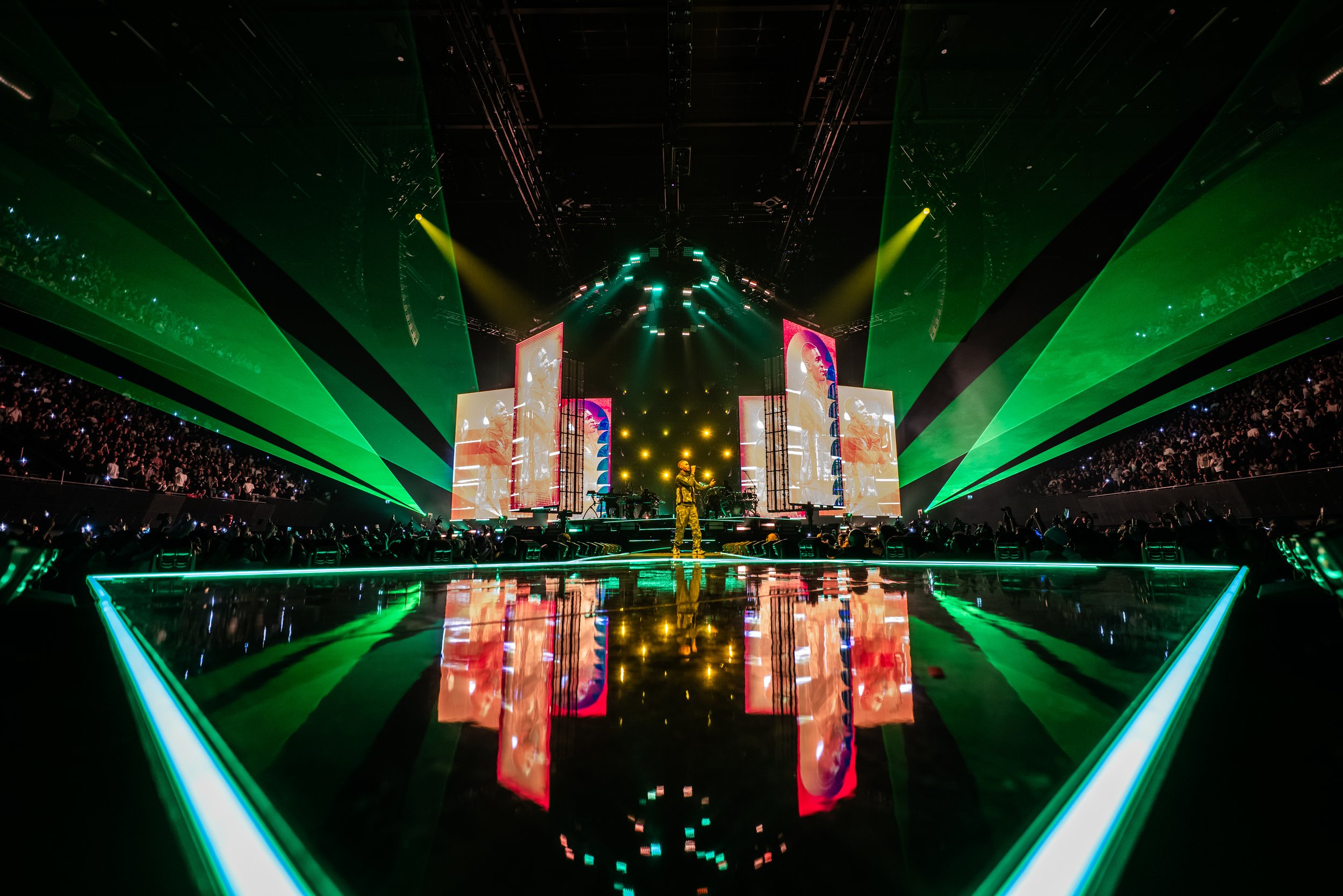
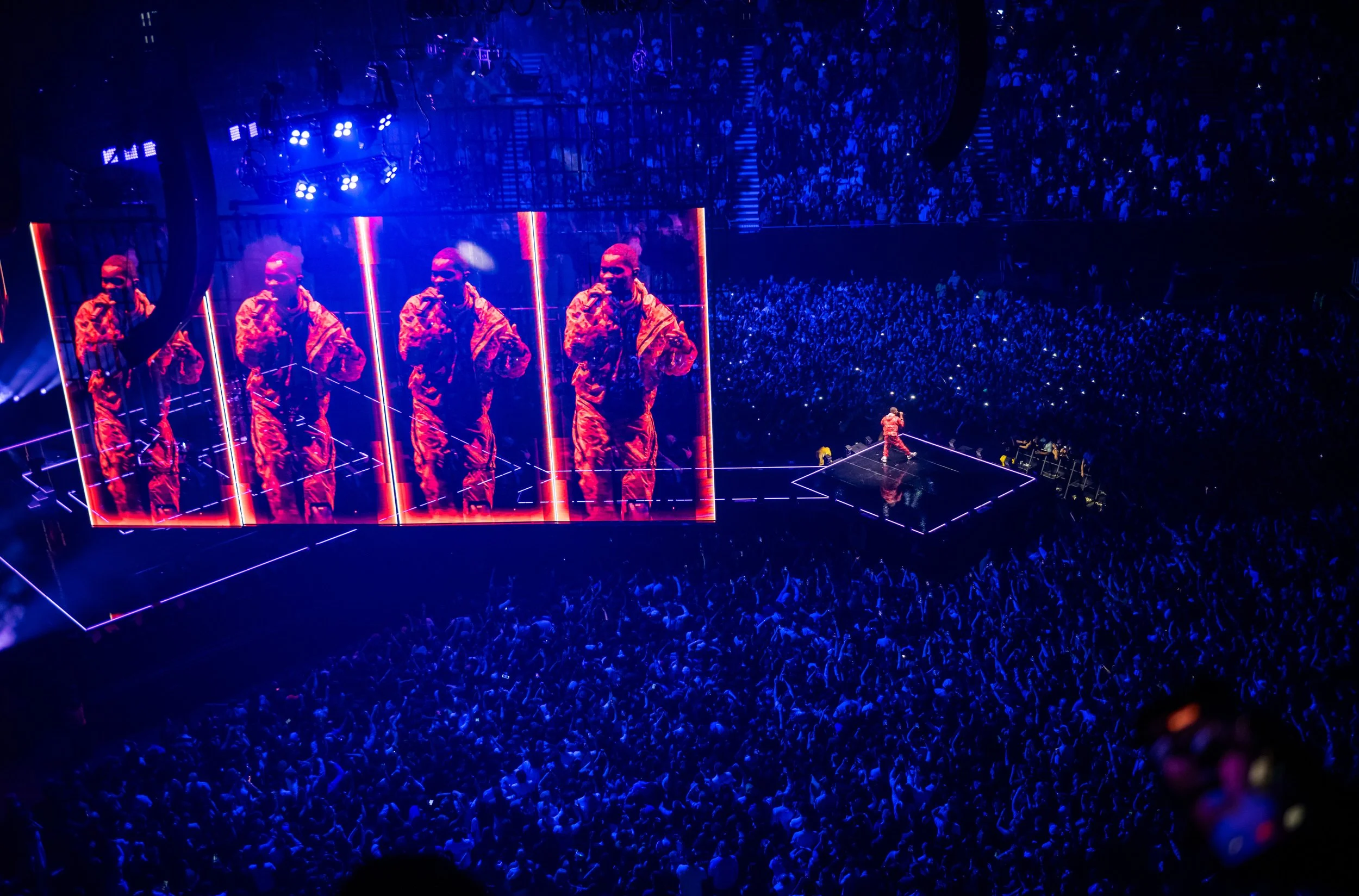
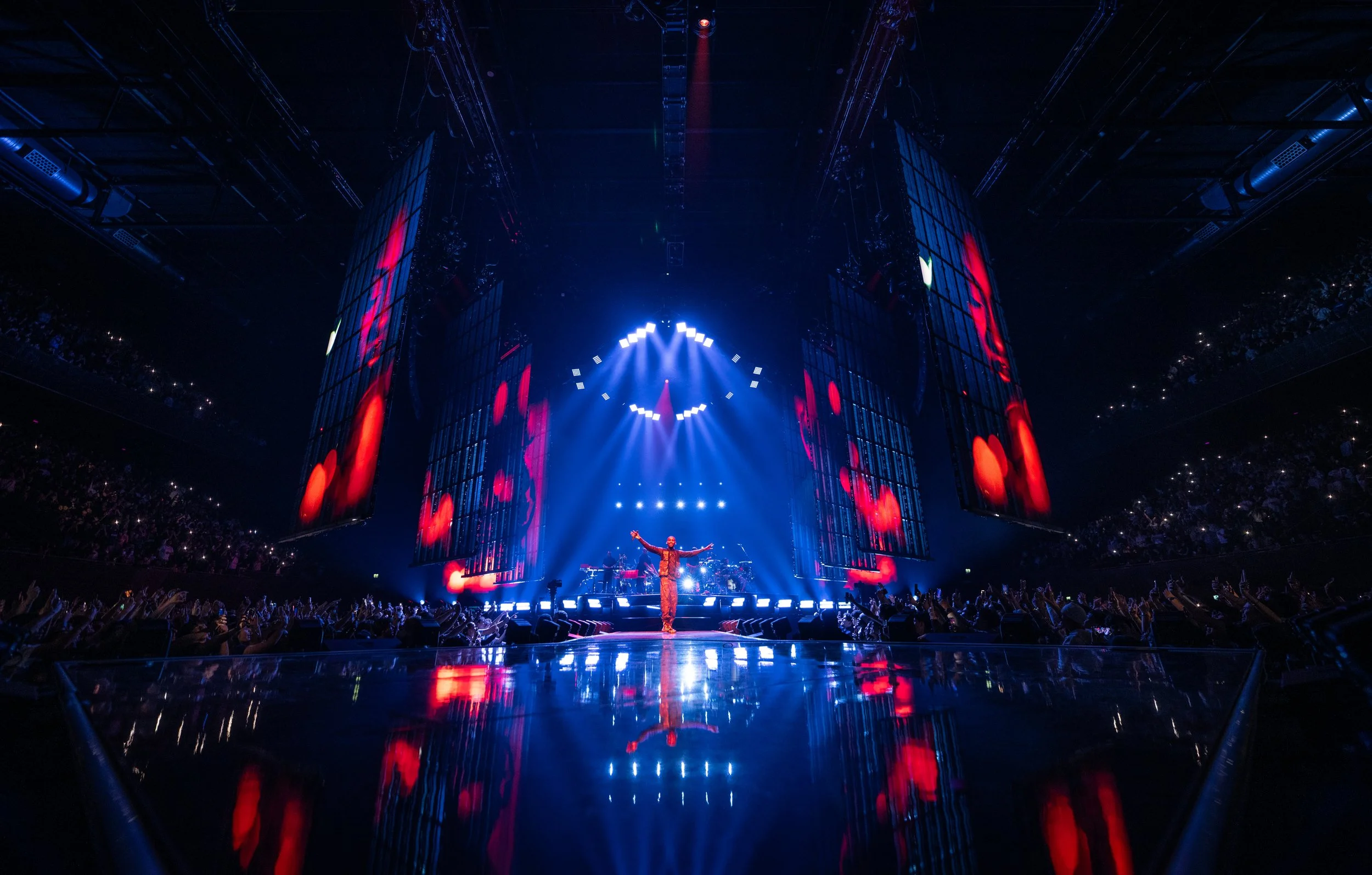
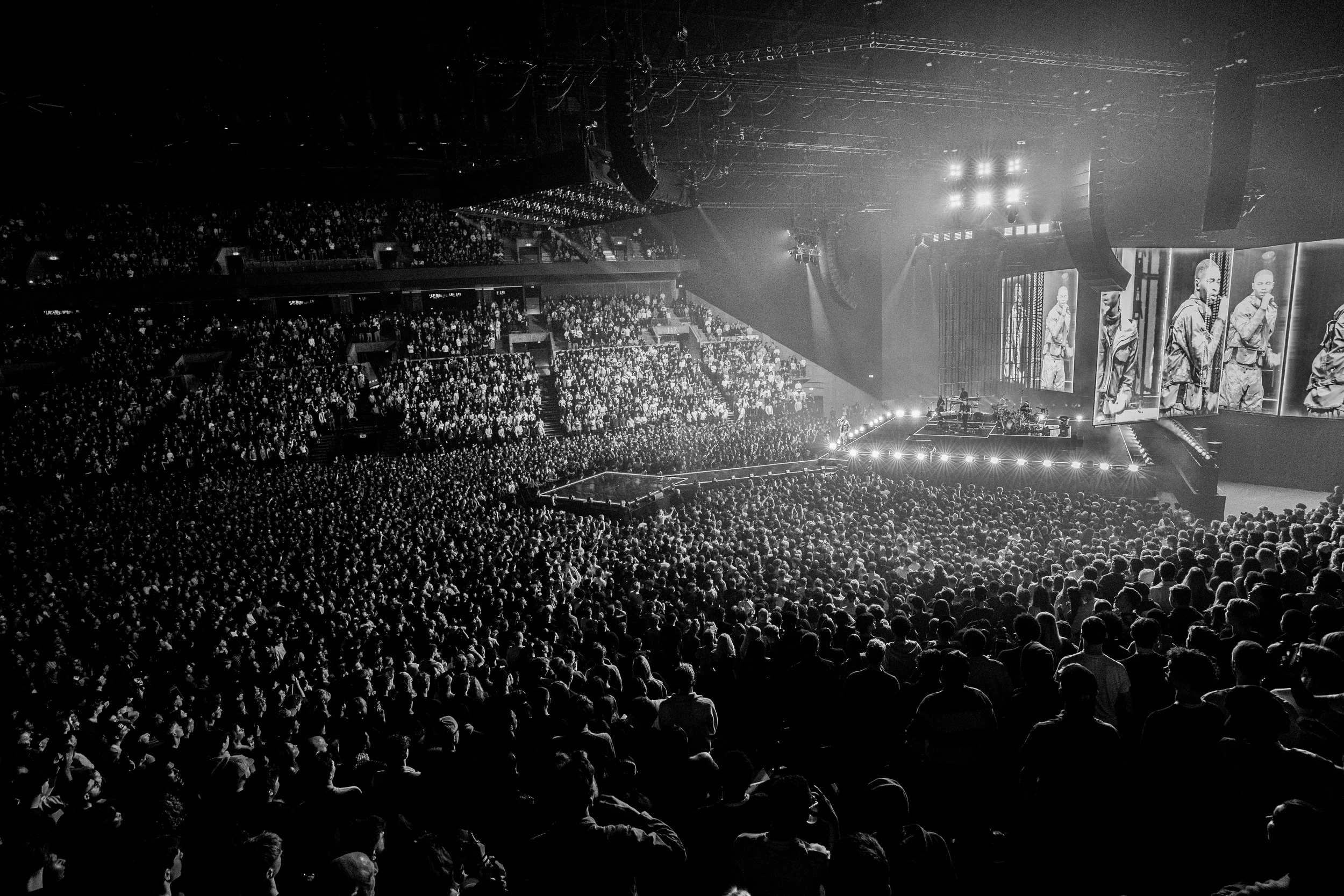
Dave's first UK tour in four years, supporting album The Boy Who Played the Harp, demanded a video system that could evolve with the performance. At the centre of the production were eight moving tracking screens suspended above the stage, constantly changing position and orientation throughout the show. Universal Pixels was brought in to deliver the complete video system, developing a real-time workflow that linked automation, tracking, playback and live camera into a single integrated environment.
The Creative Vision
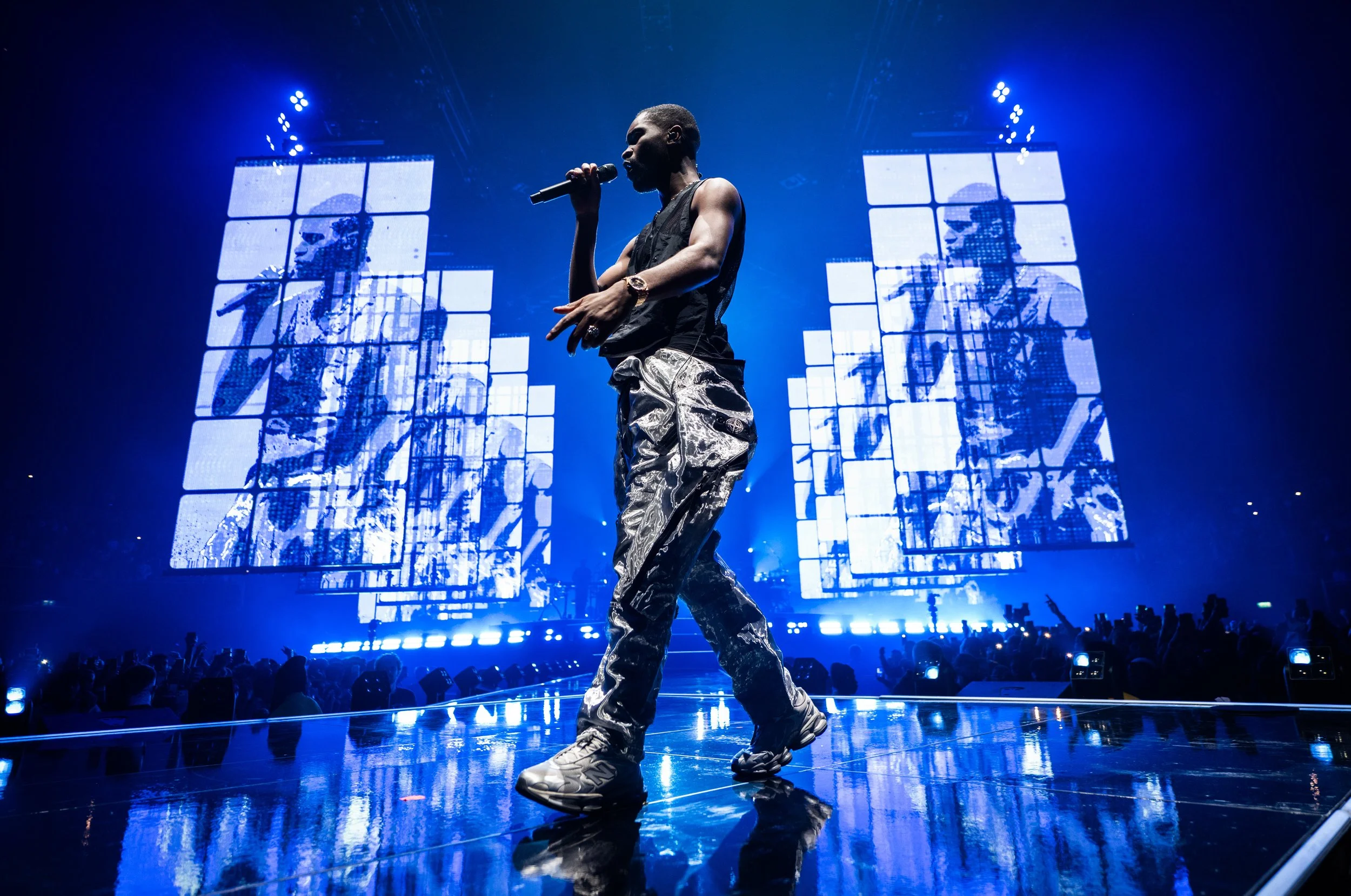
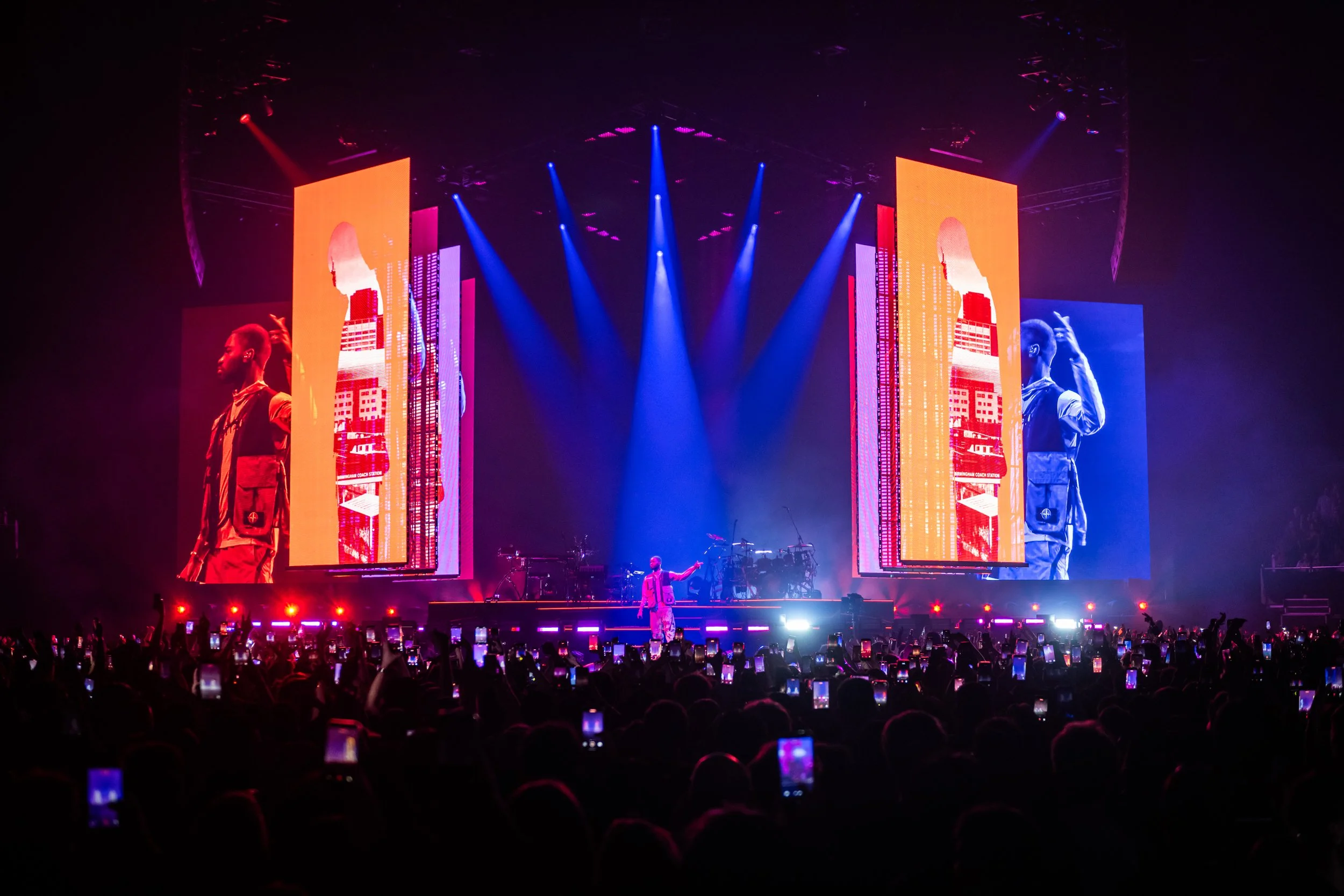
Rather than treating the LED screens as fixed display surfaces, they became moving scenic elements that continually reshaped the stage throughout the performance. As the screens travelled through different positions, content needed to remain aligned at all times. The audience didn’t see pre-programmed video cues, they viewed imagery that continuously adapted to the physical movement of the stage. This approach allowed the production to move between bold graphic moments, layered transparency effects and live camera imagery without breaking the relationship between the physical and digital environments.
The Challenge
The production needed a video system that could track eight screens as they moved and changed angle throughout the show, recalculating content on every frame rather than triggering fixed cues. Nothing about the screens' positions was static, so content had to stay correctly aligned with each one in real time, with no perceptible lag between movement and image. At the same time, the system had to combine playback, tracking data, live camera feeds and Notch-generated content - all running at 50fps - without any drop in image quality, colour consistency or latency.
The Technical Solution
Universal Pixels developed a real-time workflow built on Disguise GX 3 media servers. Positional data from the automation system was fed directly into the servers, creating a digital model of the stage that updated continuously throughout the performance. The system recalculated how content should be mapped to each screen on a frame-by-frame basis, ensuring imagery maintained its spatial relationship as the screens moved. The GX 3 servers also handled playback, tracking data, live camera feeds and Notch-generated content, allowing rendered graphics to respond dynamically to lighting, audio and performance cues. ROE Visual V8T LED panels were selected for their semi-transparent format and high brightness, enabling layered visual effects as lighting conditions changed. Panasonic UC4000 cameras captured live performance, shooting in log to preserve dynamic range and provide greater flexibility when matching live camera feeds with rendered content and LED output.
Delivery
Universal Pixels also supplied the video infrastructure needed to run the show night after night, including a distributed CCTV system covering the main stage, thrust and B-stage, so band and crew could track the Dave’s position across the space. The moving screens impacted how power, data and transport had to be handled. Universal Pixels consolidated multiple rack systems into single transport units to speed up load-in and load-out and kept the system stable across the tour through early testing and constant communication between departments.
The Result
The screens never stopped moving and the content never fell out of step with them. Playback, tracking, automation and live cameras ran together at 50 frames per second, so the stage could keep transforming seamlessly around the artist. By treating the LED screens as part of the rendering system rather than fixed display surfaces, the production kept a coherent visual world intact through every stage movement.
Photo Credits - Andrew Timms & Theo Batterman